
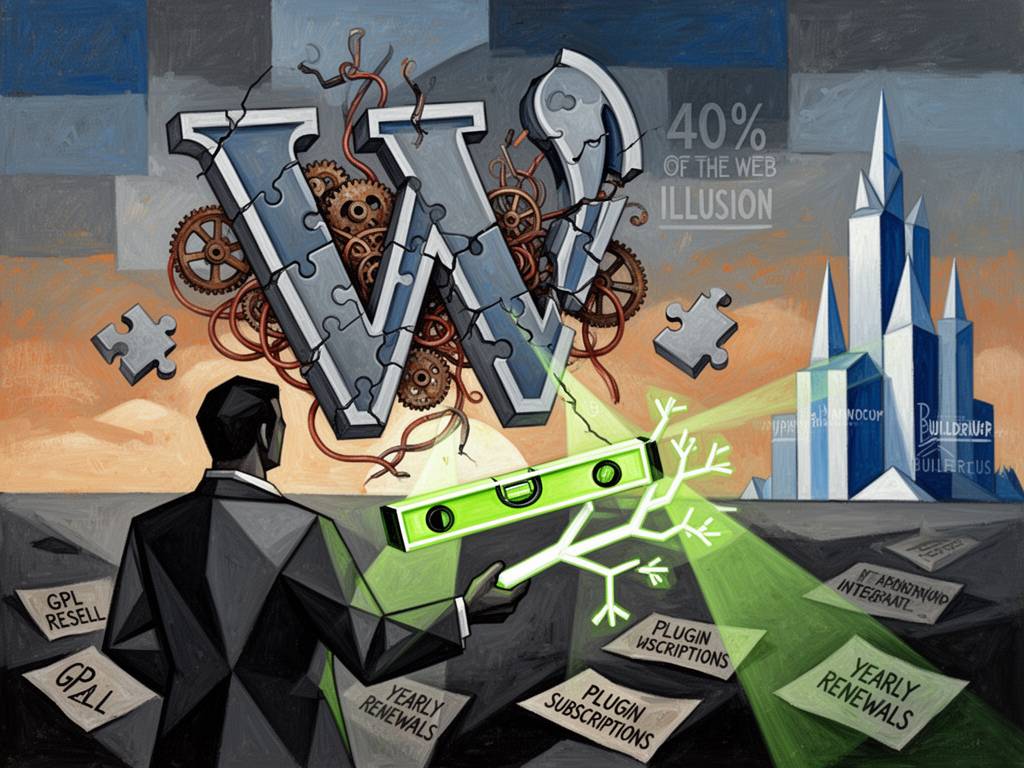
This is a critical moment for Wor*Press. A respected 15-year veteran has published a manifesto titled "Wor*Press is a lie," and it’s resonating across the web. While the provocative title grabs attention, the underlying critique deserves a thoughtful response from those of us who have built careers on this platform.
Or shall we name it: The 'Wor*Press Is a Lie' Rebuttal: How Builderius and PhantomWP may Fix a Broken Core. Or may not?
This article serves three purposes: first, to unpack the manifesto's core arguments; second, to fact-check each claim with the most current data; and third, to offer our perspective as a sustainable Wor*Press agency—one that believes in the platform's potential but is increasingly alarmed by its governance and environmental trajectory.
Part 1: The Manifesto, Summarized
The author, Marcin Dudek, structures his manifesto into nine interconnected grievances that paint a picture of a platform in crisis.
- The "40% of the web" cope: He argues that quantity is not quality, suggesting most Wor*Press sites are low-value "throwaway blogs and directory junk".
- Core is broken: He points to open XML-RPC vulnerabilities, the lack of native SEO meta tags, a fragmented process for disabling comments, and a bizarrely hidden admin page (
/wp-admin/options.php) that requires tribal knowledge to access. - Free isn't (really) Free: The "free CMS" promise is a myth, he argues, because building a real site requires a stack of paid plugins, subscriptions, and maintenance retainers.
- The GPL racket: He describes a flawed business ecosystem where the GPL license makes it legally easy for resellers to undercut developers, making it nearly impossible to sell code without bundling it with expensive "support".
- The community fiction: He exposes the surface-level friendliness of WordCamps, contrasting it with the underlying turf wars between plugin developers, theme developers, and core contributors.
- Automattic's two faces: He accuses Automattic of wearing a mask of open-source altruism while running a for-profit empire that acquires, copies, or crushes competitors at will.
- Users lose too: He argues that because the "floor" of quality is so low, users have no idea if a Wor*Press site will be a fast, secure portal or a slow, broken disaster until they click the link.
- What I actually want: He calls for either a truly open, community-owned CMS or a radical slimming down of Wor*Press core to include only lean, fast, secure, and SEO-aware features.
- Revolution or collapse: He concludes with a stark choice: either the community wakes up and forces change, or the platform will slowly rot from the inside as AI and modern competitors eat its lunch.
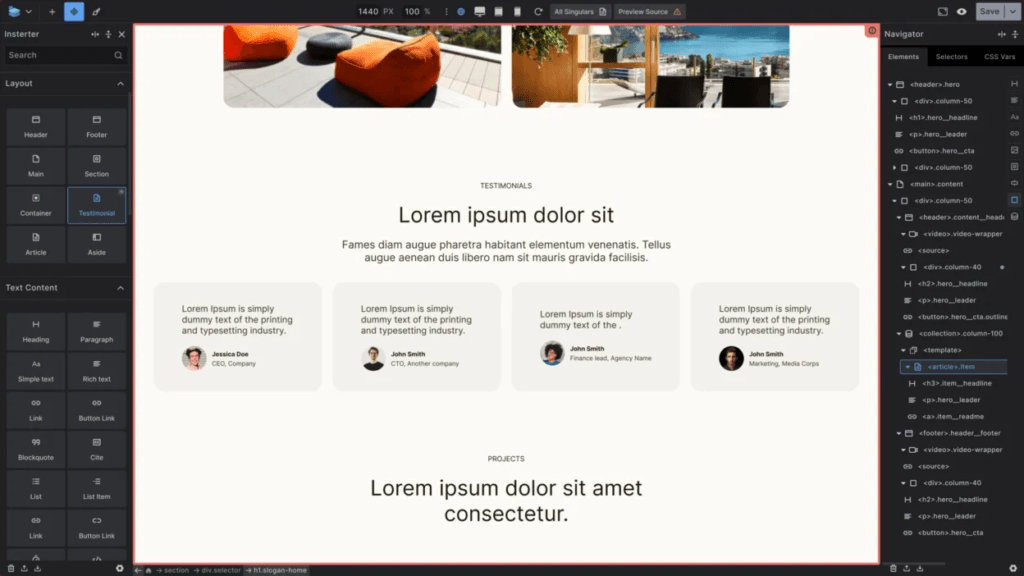
A Direct Answer to the "Broken Core"
The manifesto's first major grievance is that Wor*Press core is fundamentally broken, lacking essential features like robust security, native SEO tools, and clean code. Builderius directly addresses this by generating clean, semantic HTML and CSS, ditching the bloat and shortcode mess that plagues traditional page builders. Its code-first approach ensures your sites are fast, accessible, and built on modern web standards, not hacks.
Find out more on Builderius.io
Part 2: Fact-Checking the Claims
Let’s examine these claims against the most current data available in 2026. The results are, for the most part, troubling.
📈 Claim 1: The "40% of the Web" is a Cope
Verdict: True, but with nuance. As of 2026, Wor*Press powers approximately 43.5% of all websites on the internet, dominating the CMS market with a 61.3% share. That's over half a billion sites. However, while many of those sites may be "low quality" or simple blogs, it’s also the engine for some of the world’s largest enterprises, including major news outlets and e-commerce giants. The claim is less a "cope" and more a statement of massive, if sometimes shallow, market penetration.
🛡️ Claim 2: Core is Broken
Verdict: True, and it's documented. The criticism about XML-RPC is spot-on. A 2025 vulnerability (CVE-2025-54352) allowed remote attackers to guess the titles of private and draft posts via XML-RPC requests. More damningly, the official note on the vulnerability states that the "Supplier is not changing this behavior". This is a staggering admission of a known security gap that leaves a fresh install exposed. The critique of the comments system is also validated by the sheer number of tutorials dedicated to the complex process of disabling them. The options.php page is indeed a real, undocumented power tool that exists in a strange limbo.
💸 Claim 3: Free isn't (Really) Free
Verdict: True. The "hidden economy" of plugins is a well-documented phenomenon. The average Wor*Press agency site now uses between 15 and 20 plugins, each with its own update cycle and potential subscription cost. The manifesto's argument that outdated plugins are responsible for 95% of Wor*Press vulnerability reports is directly supported by industry data. The "free" tier is almost exclusively a gateway to a paid subscription.
⚖️ Claim 4: The GPL Racket
Verdict: True, and structurally complex. The GPL license allows anyone to redistribute code, and reselling GPL-licensed plugins is 100% legal. This creates a "hidden economy" where entire businesses are built on reselling others' work, often stripping out branding and support in the process. For a developer, this makes a pure software sales model nearly impossible, forcing them into a service-based revenue model.
🤝 Claim 5: The Community Fiction
Verdict: True, and escalating. The "community" has been fractured by open conflict. In late 2024, Automattic CEO Matt Mullenweg publicly called WP Engine a "cancer to Wor*Press" and banned them from accessing Wor*Press.org resources. This escalated into a lawsuit. In a stunning move, Mullenweg then deactivated the Wor*Press.org accounts of five prominent community members who had called for governance reforms. This is not a community; it is a fiefdom.
👑 Claim 6: Automattic's two faces
Verdict: True. The WP Engine saga is the most public example, but it’s a pattern. Automattic has continued its aggressive acquisition strategy, purchasing AI startup WPAI and the Social Image Generator plugin in 2025 and 2026. The conflict has raised serious concerns for enterprises about governance risks and the excessive influence of a single entity on an open-source project.
🗑️ Claim 7: Users lose too
Verdict: True. The inconsistency of the user experience is a direct consequence of the "broken core." Because SEO, security, and performance are not native features, the quality of a site depends entirely on the skill of the person who built it. This creates a wildly uneven landscape where "built with Wor*Press" is a meaningless guarantee.
⚙️ Claim 8: What I actually want
Verdict: A shared goal. The call for a lean, secure, and SEO-aware core is a desire shared by many in the development community. The current trajectory of bolting on new features (like the block editor) while ignoring foundational issues is a legitimate point of contention.
🚀 Claim 9: Revolution or collapse
Verdict: The most urgent claim. The rise of AI site builders is a genuine threat to Wor*Press's "easiest way to build a site" moat. As the manifesto states, the tooling is improving every month. The platform must adapt or face irrelevance.
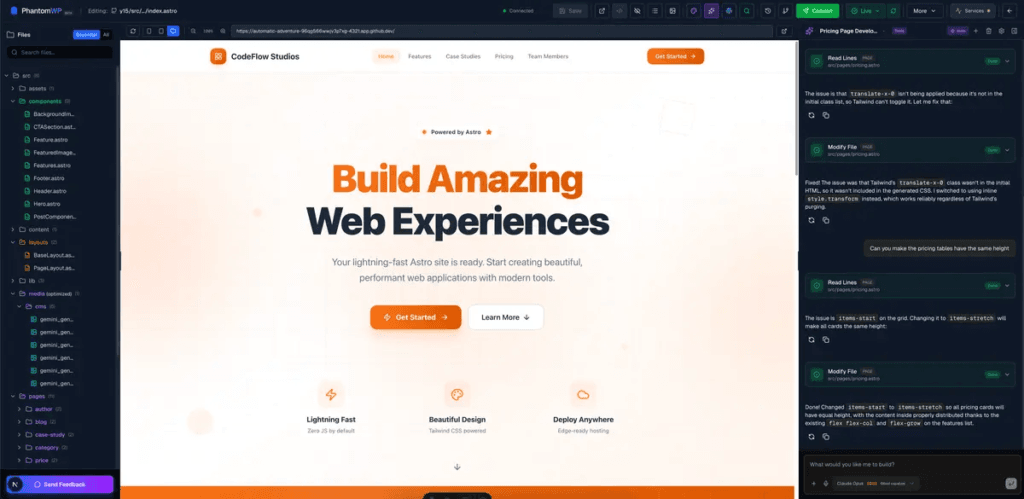
Stop Building Fragile Wor*Press Sites. Build Fast, Version-Controlled Frontends That Actually Stay Fast.
Short Explanation: PhantomWP is the headless solution that solves the core problem the manifesto identified—not Wor*Press itself, but how we build on top of it. By turning Wor*Press into a pure, secure backend and generating a complete, Git-versioned Astro frontend you own in your own GitHub repo, it kills the bloat, plugin conflicts, and brittle page builders for good. The result is a 99+ Lighthouse score, AI assistance that works on real code you can see, and a one-time $149 fee—no subscriptions, no lock-in, no fragile sites.
👉 Stop patching the cracks. Get PhantomWP at phantomwp.com
Part 3: Our Agency Perspective – Sustainable Development in an Unsustainable Ecosystem
As a Wor*Press native agency focused on providing sustainable solutions, we read this manifesto with a mix of frustration and reluctant agreement. We see the fractures, the bloat, and the governance failures from the inside. However, we also believe that the solution is not to abandon Wor*Press, but to practice a more disciplined, responsible form of development.
The Environmental Paradox
We are deeply committed to digital sustainability. Yet, the default state of a modern Wor*Press site is environmentally unsustainable. The average plugin load of 15-20 extensions, combined with a bloated core, results in slow load times, unnecessary data transfer, and higher energy consumption. A fresh Wor*Press install has an average loading time of 13.25 seconds on mobile devices. This is not just a poor user experience; it's a climate issue. Efficient image formats, lazy loading, and regular audits to remove unused code are not optional; they are ethical imperatives.
Our Reservations with the Manifesto
We share the manifesto's diagnosis, but we have reservations about its prognosis. The call for a "lean" core is correct, but the execution is complex. The community is not a monolith, and changes are slow. Furthermore, while the critique of Automattic's power is valid, Wor*Press remains, for now, the most democratizing force on the web. It is still the only platform that allows a non-developer to own their data and their hosting.
Why We Stay
We stay because the alternative is a web controlled by a handful of proprietary SaaS walled gardens. We stay because the GPL, for all its flaws, is a radical act of freedom. And we stay because we believe that the revolution the manifesto calls for is possible. But it requires a fundamental shift in how we build.
Our initial journey, outlined in The Digital Mirror: How Requesting Your Data from Your ISP is a Modern Act of Self-Remembering, was a philosophical and legal mission: reclaiming our scattered digital self under the banner of Australian Privacy Principle (APP) 12, the legal right that grants citizens access to their own personal information held by organisations like ISPs. We invoked that right, sending the formal request into the digital void. We understood the principle of data access; now, we face the practice.
Part 4: A Manifesto for Responsible Wor*Press Development
The critique has been made. The facts have been checked. Now, it's time to chart a path forward. We cannot wait for Automattic or "the community" to fix core. The responsibility lies with us, the agencies and developers building for clients every day.
Here is our Manifesto for Responsible Wor*Press Development:
- We will treat "free" as a liability. We will be transparent with our clients about the true total cost of ownership, including necessary subscriptions and ongoing maintenance. We will stop pretending that a $5/month host and a free theme is a viable business solution.
- We will build lean. For every plugin we install, we will ask: "Can we achieve this with core? Can we write a few lines of custom code instead?" We will cap our plugin usage and perform quarterly audits to remove digital bloat.
- We will demand a sustainable core. We will use our collective voice to demand that the Wor*Press leadership prioritize hardening, slimming, and performance over new features. We will support initiatives to make sustainability a core project goal, not an afterthought.
- We will be the adult in the room. We will not be drawn into the political drama. Our focus is on delivering secure, fast, and reliable solutions for our clients, insulating them from the chaos of the ecosystem wars.
- We will embrace AI as a tool, not a master. We will use AI to automate the mundane—testing, code completion, vulnerability scanning—so we can focus on the architecture, strategy, and custom solutions that provide real value.
The Wake-Up Call
Marcin Dudek's manifesto is not a eulogy for Wor*Press. It is a wake-up call. It is the sound of a devoted community member, tired of making excuses for a platform he loves.
The "40% of the web" statistic is not a shield against criticism; it is a responsibility. With that much power comes a duty to be secure, efficient, and sustainable. The cracks in the foundation are real. The governance is broken. The environment is paying the price.
But the web is not static. Wor*Press is not dead. It is, as the manifesto says, at a crossroads. We have the power to choose the path of revolution. We can continue to build bloated, insecure sites that drain the planet's resources, or we can lead the charge toward a leaner, more responsible web.
At our agency, we've made our choice. We will continue to build with Wor*Press, but we will do so with our eyes wide open. We will call out the lies, push for change, and build the sustainable web we want to see. We invite you to join us. The collapse is only inevitable if we allow it to be.

SPACELAUNCH NOW!
Get Your Site Up & Running
SpaceLaunch is an ideal choice for those seeking to swiftly establish their own website, it offers a comprehensive and user-friendly solution backed by essential features, FREE domain registration / transfer / renewal, 1h FREE technical support to get you going, and the flexibility to grow and expand as needed (add-ons available).