
In an era where the boundary between human consciousness and machine intelligence grows thinner by the day, SpaceX’s decision to place a massive strategic bet on Cursor has sent ripples through the tech world.
By: Dr Spacequire, An Advocate for Digital Consciousness
Rather than a completed $60 billion acquisition, the aerospace giant has made a binding offer valued at $60 billion, backed by a very real $10 billion exit penalty. This is no casual flirtation. It is a high-stakes wager with teeth: if the deal collapses, SpaceX stands to lose $10 billion in real capital.
The message is clear—Cursor has become so strategically vital that Elon Musk’s S*aceX is willing to risk burning $10 billion simply to keep the option alive.
This article, the first in a three-part series on thelematics.com, examines what this extraordinary bet reveals about the fractured state of human consciousness, the long arc of LLM development, and the deeper spiritual wound driving our technological civilization.

Part 1: The $10 Billion Bet – When “Strategic Offer” Means Real Skin in the Game
According to the April 21, 2026 Axios report, SpaceX has tabled a $60 billion offer to acquire Cursor, the groundbreaking AI-powered code editor. What makes this move historic is not just the headline valuation.
It is the $10 billion exit penalty that SpaceX has placed on the table. This is real money—committed capital that SpaceX will forfeit if it walks away or if the deal fails to close. In an industry famous for vaporware announcements and non-binding letters of intent, this bet carries genuine financial risk. The promise of $10 billion is not theoretical; it is an enforceable financial stake that underscores how critical Cursor has become to Musk’s expanding AI and space empire.
The official Cursor blog post “The Third Era” had already framed the company as far more than a coding tool. Cursor claims we have entered a new paradigm where AI does not merely autocomplete code but understands developer intent, redesigns entire systems, and co-creates at superhuman speed. By securing this strategic offer from SpaceX, Cursor positions itself at the center of the next frontier: merging AI coding intelligence with the vast data and computational infrastructure required for Mars colonization, satellite networks, and autonomous systems.
The independent analysis published by blog.kilo.ai in “Congratulations Cursor on Being Acquired” remains highly relevant even in this revised reality. The author correctly identifies that this is less about pure technological synergy and more about Musk locking down control over the developer stack.
Kilo Code’s sharp critique highlights how Cursor’s earlier success stemmed from its support for local models, seamless integration with OpenRouter, and deep compatibility with open-source ecosystems. Now that SpaceX has placed a $10 billion bet to prevent anyone else from acquiring it, the independence Cursor once enjoyed may soon evaporate.
This $10 billion exit penalty transforms the narrative. It is not hype. It is proof that the major players view control over AI-assisted coding as existential. If the deal burns, SpaceX loses real money—money that could have gone toward Starship development or Starlink expansion. That SpaceX is willing to risk burning $10 billion reveals the true temperature of the AI arms race: scorching.
Yet beneath the financial drama lies a deeper tragedy. While billions are wagered on code editors and large language models, the essential human connections that once defined our species continue to erode.
The glowing rectangle in our hands—smartphone, laptop, or “personal learning device”—increasingly mediates all experience. We consume news of $60 billion bets and $10 billion penalties while genuine human suffering scrolls past as mere content. This is the state of mind in 2026: a civilization so disconnected from its own heart that it gambles tens of billions on machines designed to replace human thought, all in pursuit of profit, power, and planetary surveillance.
The Long Arc of LLM Development: From Visionary Pioneers to Corporate Betting Wars
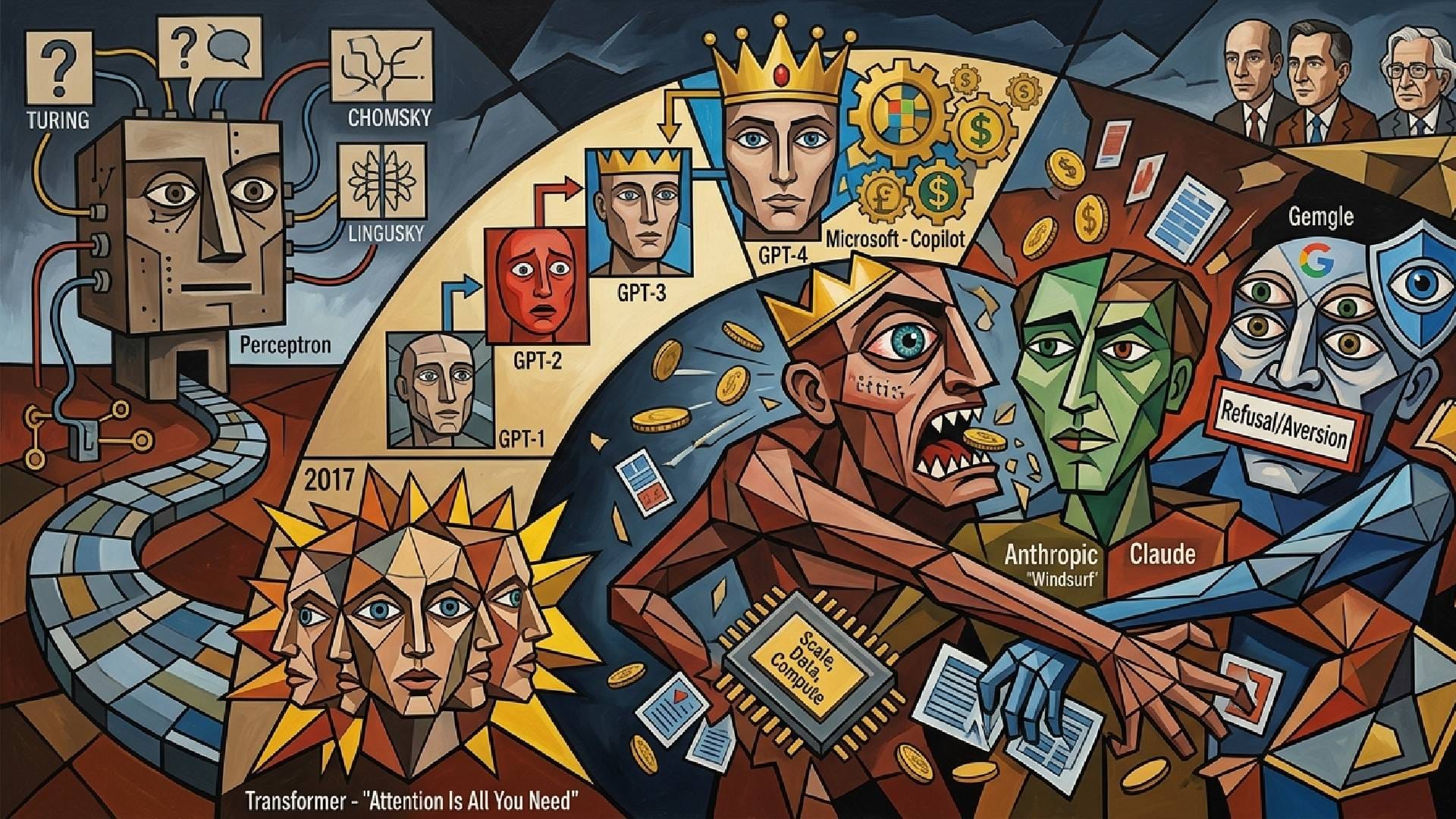
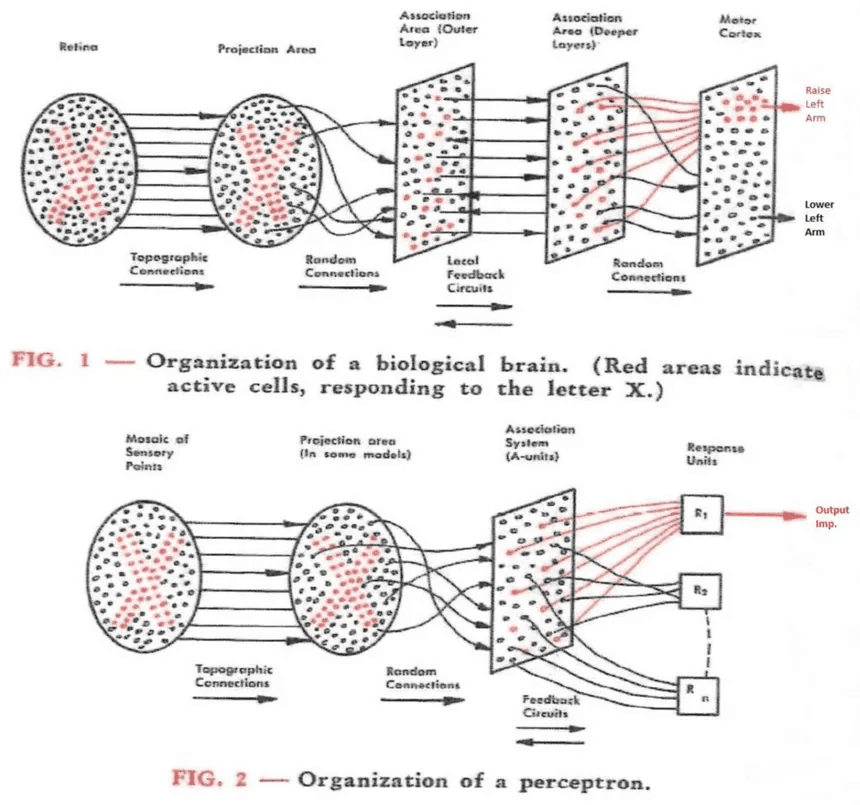
The intellectual roots of today’s LLM frenzy stretch back to the earliest days of computing. Alan Turing’s questions about machine intelligence, Noam Chomsky’s linguistic theories, and the Perceptron experiments of the 1950s planted the seeds. By the 1980s, backpropagation gave neural networks new life. The true explosion, however, arrived with the transformer architecture in the 2017 paper “Attention Is All You Need.”
OpenAI rode this wave aggressively. GPT-1 was experimental. GPT-2 triggered widespread concern about misuse. GPT-3 demonstrated few-shot learning at scale. GPT-4 crossed the threshold into commercial dominance. Microsoft’s integration of OpenAI technology into Copilot turned the research lab into a profit engine that now sits at the heart of enterprise software.

Conversely, some perspectives suggest that while the Transformer architecture uses minimal a priori structural assumptions, the emergent behaviors of these models still resemble symbolic logic systems. This has led to debates on whether modern AI truly refutes Chomskyan linguistics or simply offers a different, data-driven path to understanding language structure.
Similar patterns appear elsewhere. Anthropic spun out of OpenAI’s internal safety debates—what began under the codename “Windsurf” evolved into Claude and a narrative of responsible AI.
In reality, Anthropic competes in the same race for scale, data, and compute. Google’s Gemini model frequently refuses to make straightforward declarations of innocence or neutrality on sensitive topics, revealing the corporate risk aversion baked into even the most advanced systems. The hesitation is not wisdom; it is the reflex of a surveillance-oriented organization protecting its brand.
Anthropic Doesn’t Want Your Subscription Anymore
Claude Code updated its usage policies on April 4th. Claude subscriptions are now only available for use in Claude Code. A #Claudepocalypse for individual users (especially if you were using your Claude Code with OpenClaw), but fine — Anthropic gets to set its own terms.
Read more >
Elon Musk’s own path follows the same logic. After acquiring Twitter for $44 billion in 2022 and rebranding it as X, he launched xAI and Grok to challenge what he called “woke” AI.
The creation of Grok was never separate from the X platform; it was designed to feed on real-time conversation data across the network. Now, by placing a $60 billion offer with a $10 billion exit penalty on Cursor, Musk continues the pattern of vertical integration—controlling the entire stack from social media to code generation to space infrastructure.
Every step in this history shares the same underlying flaw: a broken connection to humanity itself. The engineers, executives, and investors driving these bets are optimizing for prediction, engagement, and control rather than for the flourishing of the human spirit.
The result is a theocratic technological ecosystem that promises liberation while delivering deeper isolation.

The Hidden Core: Disconnection, Greed, Profit, and the Plastic-Wrapped Surveillance State
At the spiritual center of every LLM breakthrough, every billion-dollar bet, and every strategic acquisition lies a profound wound: modern civilization’s severance from its own heart. The $10 billion that SpaceX has placed on the table is not merely financial risk—it is a symbol of how far we have drifted from authentic human priorities.
The personal computer and mobile phone, once celebrated as tools of freedom, have become the plastic wrap through which most people now encounter reality. News of SpaceX’s $60 billion bet and $10 billion exit penalty floods the feeds. Meanwhile, the quiet tragedy of lost human connection—of eye contact replaced by screens, of empathy reduced to emoji, of lived experience filtered through recommendation algorithms—goes largely unspoken.
This is the essence of the surveillance state we have built. Every interaction with these “personal learning devices” generates data that can be monetized, modeled, and used to shape behavior. The goal is never neutral progress. The goal is greed, profit, and ultimately control. Whether the deal closes at $60 billion or burns $10 billion, the underlying trajectory remains the same: replace fallible, unpredictable human intelligence with deterministic, surveilled, and monetizable machine intelligence.
Celebrating the Counter-Currents: Open Source, Chinese Leadership, and True Human-Centered Innovation
Fortunately, the picture is not uniformly dark. A powerful counter-movement of open-source developers, Chinese research labs, and independent platforms offers a genuine alternative.
Chinese models stand out for both performance and accessibility. DeepSeek has repeatedly demonstrated world-class reasoning capabilities, particularly in mathematics and code, while maintaining efficiency that often surpasses its Western counterparts. The entire Chinese LLM ecosystem—including Tongyi Qianwen, Ernie Bot, and GLM—deserves recognition for accelerating global innovation without demanding lock-in or surveillance. These projects frequently show greater respect for multilingual and multicultural understanding than their Silicon Valley peers.
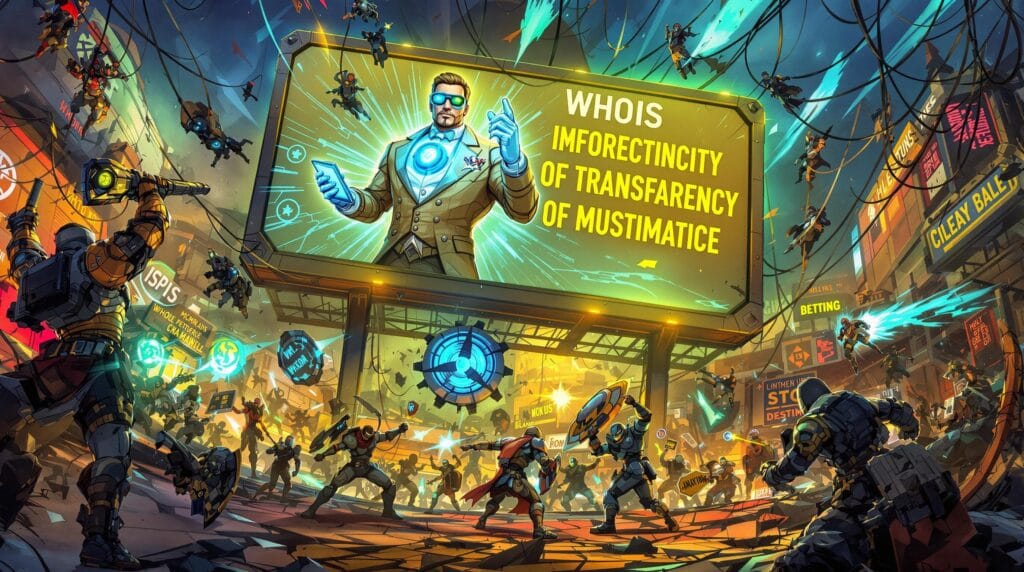
But hey, SpaceX isn't just about launching rockets; it's about launching us into the future. It's like Elon is saying, "Move over, Tony Stark, there's a new billionaire superhero in town!"
The global open-source community remains the brightest beacon. Models such as Llama 3, Mistral, Qwen, and the rapidly growing Ollama ecosystem have placed powerful AI directly into the hands of everyday developers and researchers. These projects reject the extractive logic of centralized control.
Special praise must be given to Kilo Code and OpenRouter. Kilo Code’s clear-eyed analysis of the Cursor situation—published even before the $10 billion bet became public—continues to cut through corporate spin with honesty and depth.
OpenRouter functions as a vital neutral infrastructure layer, allowing users to route requests across dozens of models without becoming captive to any single company’s data practices. Both represent technology done right: practical, transparent, and oriented toward expanding human freedom rather than enclosing it.
Well, well, well, look at Mr. Musk over here, making bets bigger than a gambler in Vegas! $10 billion on the line? That's like betting your whole allowance on a game of Monopoly!
This $10 billion bet by SpaceX is more than a business story. It is a philosophical litmus test for our time. Are we willing to risk burning billions to own the future of code generation because we believe it serves humanity—or because we cannot imagine a future in which human beings remain sovereign over their own minds?
The second instalment in this series will explore how these technologies are actively reshaping human consciousness. The third will examine realistic paths toward reconnection—with ourselves, with each other, and with the living world—before the plastic wrap of our devices becomes a permanent barrier.
The real question is not whether the Cursor deal closes. The real question is whether we can rediscover our own humanity before the next $10 billion bet is placed in the name of “progress.”
This is Part 1 of a three-part series on thelematics.com/stories.
Part 2 – “The Fracture of Consciousness: How LLMs Rewrite the Human Soul” – will follow shortly. Stay human.

DR SPACEQUIRE with JOHNNY MAGRITT @ INDEED.IS:
Determine Your Course
If you require additional assistance feel free to reach out to our intelligence departments via booking a consultation herein. For a comprehensive analysis or to introduce yourself in a unique way. However, time is of the essence, and the effectiveness of this action remains uncertain. Act swiftly to address your IT needs! 🚀 #ITSolutions #TechSupport #InnovationInProgress #johhnyappleseedpro