

The marketing is everywhere. “Hide your IP. Protect your privacy. No logs. Military-grade encryption.” VPN ads flood YouTube, flood social media, and even sneak into mainstream news. They promise freedom from your ISP’s prying eyes, from governments, from corporations. But the truth is uglier and simpler: most commercial VPNs marketed for privacy don’t protect you—they endanger you. They don’t solve surveillance; they centralize it. They don’t eliminate watchers; they become the ultimate watcher. And in the process, they turn into honeypots that attract exactly the people who most need to stay hidden.
This isn’t conspiracy theory. It’s network reality backed by years of court records, data breaches, and basic technical facts. The original breakdown on hackingpassion.com nailed it: using a commercial VPN for privacy is an absolutely useless idea that often makes things worse. I’m taking a hard stand here: stop paying these companies. Delete the apps. The entire industry is built on fear, high margins, and promises that collapse the moment real pressure hits. You are not buying privacy. You are buying an illusion—and handing your metadata, identity, and trust to strangers who have every incentive to log, sell, or surrender your data.
Let’s break it down without the corporate spin.

Take a 5-minute break every hour to rest your eyes and stretch your body.
How VPNs Actually Work—and Why They Create a Single Point of Total Visibility
You install the app. It creates an encrypted tunnel from your device to a server owned by the VPN company. Your ISP sees only an encrypted blob heading to one IP address. The websites you visit see the VPN’s exit IP instead of your real one. Sounds like privacy, right?
Wrong. You’ve simply moved the problem. Your ISP can no longer see which sites you visit, but the VPN provider now sees everything: your account details, payment information, signup IP, connection timestamps, and full destination metadata. HTTPS has already encrypted the content, so your ISP couldn’t read your messages anyway. The real leak was always metadata—who you connect to, when, and how much data moves. A VPN doesn’t eliminate that leak. It consolidates it into one convenient database belonging to a company you trust even less than your ISP.
Without a VPN, knowledge is fragmented: your ISP knows your identity and destinations but not content; each site knows content but not your full identity or browsing history across the web. A VPN merges both halves at one choke point. The company at the end of that tunnel holds your real identity on one side and every site you visit on the other—linked, timestamped, and stored on hardware they control. They can log it, sell it, hand it over, or lose it in a breach. You cannot audit their servers. “No-logs” is a marketing slogan, not a technical guarantee. The traffic has to flow through their infrastructure either way.
This creates the perfect honeypot. Ordinary users stay with their ISP. Privacy-conscious users—activists, journalists, researchers, dissidents, even criminals—flock to a handful of VPN brands. They bring their real emails, credit cards, and high-value traffic patterns. That concentrated pool is pure gold for advertisers, data brokers, intelligence agencies, and attackers. The VPN keeps working perfectly while silently watching. Facebook proved this model with Onavo, a “privacy” VPN that was really a surveillance tool. The interface looked identical from the inside. That’s the entire point of a honeypot.
Practice good posture to combat the negative effects of sedentary work, such as slouching and back pain.
The Track Record Is Damning—And It Keeps Getting Worse
The list of broken promises isn’t short. It’s a hall of shame:
- PureVPN loudly advertised “zero logs” yet handed connection timestamps to the FBI. Investigators ran a time-correlation attack—matching the exact moment a VPN session started with the suspect’s other accounts—and identified the user without needing browsing history.
- IPVanish claimed no logs while secretly recording activity and surrendering names, emails, and home IPs to authorities.
- HideMyAss sold anonymity but delivered logs that got a user convicted in the UK.
- UFO VPN and its two dozen sister brands pushed no-logs policies until a exposed server dumped over a terabyte of logs—including plaintext passwords—for up to 20 million users.
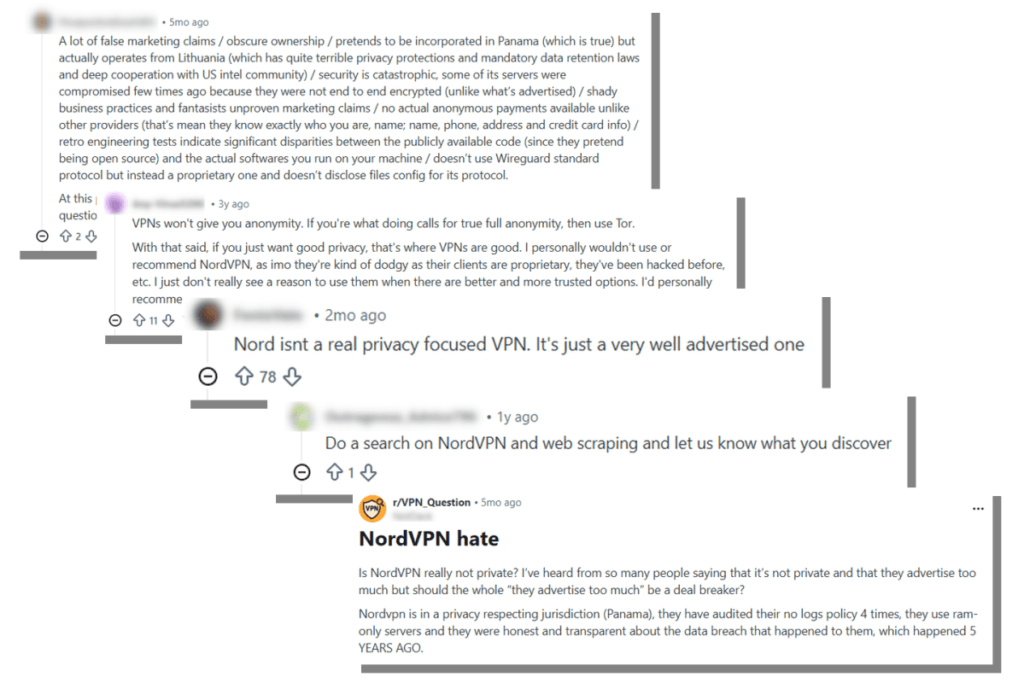
These aren’t isolated incidents. They span countries, years, and business models. The rare success story, like the 2025 Athens court case dismissing charges against Windscribe’s founder because no logs existed to tie him to an attack, only proves how exceptional real no-logs compliance actually is. Most audits are narrowly scoped theater. Court records under real pressure tell the truth.
The business itself is rotten. Server farms are cheap. Bandwidth is commoditized. Subscriptions are recurring and high-margin. The product isn’t privacy technology—it’s the story that you desperately need their app. Stop falling for it.
Limit coffee intake to 1-2 cups per day to avoid dehydration and excessive caffeine consumption.
When VPNs Actually Make Sense—And When They Don’t
VPNs were invented for legitimate corporate remote access: employees reaching internal networks securely from outside. That use case still works. They also help bypass censorship in repressive countries (until the VPN provider itself gets blocked), dodge geo-restrictions for streaming libraries, and hide your IP from other players in peer-to-peer games like GTA Online where packet sniffers can expose your home address.
Notice what’s missing from that list? Privacy. For real anonymity, commercial VPNs are the wrong tool. Turn instead to Tor, proxychains, obfuscated proxies, DNS hardening, and traffic shaping. The original article was right: privacy is not on the VPN marketing checklist.
Free VPN apps on your phone? Uninstall them immediately. They’re often paid for with your data or by reselling your bandwidth. The entire model is predatory.
Riseup, Personal VPN Sevices
Riseup provides online communication tools for people and groups working on liberatory social change, a project to create democratic alternatives and practice self-determination by controlling our own secure means of communications.
Use blue light filters on screens to reduce eye strain and improve sleep quality.
The Real Solution: Self-Host Your Own VPN and Eliminate the Middleman
If you want control, you must take it. Self-hosting a VPN on any VPS removes the commercial operator entirely. You become the provider. You decide the logging policy (ideally none). You control the keys. The only remaining trust is in your VPS provider and your own operational security.
Here’s exactly how to do it on any standard VPS running Ubuntu 22.04 or 24.04 using WireGuard—the fastest, simplest, and most modern protocol.
bash
apt update && apt upgrade -y
apt install wireguard -y

# Generate keys on the server
wg genkey | tee server_private.key | wg pubkey > server_public.key
wg genkey | tee client_private.key | wg pubkey > client_public.key
Create /etc/wireguard/wg0.conf:
ini
[Interface]
PrivateKey = <contents_of_server_private.key>
Address = 10.0.0.1/24
ListenPort = 51820
PostUp = iptables -A FORWARD -i wg0 -j ACCEPT; iptables -t nat -A POSTROUTING -o eth0 -j MASQUERADE
PostDown = iptables -D FORWARD -i wg0 -j ACCEPT; iptables -t nat -D POSTROUTING -o eth0 -j MASQUERADE

[Peer]
PublicKey = <contents_of_client_public.key>
AllowedIPs = 10.0.0.2/32
Enable forwarding, bring the interface up, and enable on boot:
bash
echo "net.ipv4.ip_forward=1" >> /etc/sysctl.conf
sysctl -p
wg-quick up wg0
systemctl enable wg-quick@wg0
Copy the client config to your devices, swap the keys, point to your VPS IP on port 51820, and connect. For censored networks, add obfuscation with udp2raw or obfsproxy. Harden the server: key-only SSH, automatic security updates, strict firewall rules, and anonymous payment for the VPS. Rotate keys regularly.
OpenVPN works too if you need more enterprise features, but WireGuard is cleaner for most people.
Incorporate regular exercise into your routine to counteract the effects of prolonged screen time on physical health.
Take It Further: Run VPN Directly on Your Router
The strongest setup protects every device on your network without installing client software on phones, laptops, or IoT gadgets. Deploy the VPN at the router level.
On an OpenWRT-compatible router (GL.iNet devices are excellent for this), install the WireGuard packages through the web interface or SSH:
bash
opkg update && opkg install wireguard-tools luci-proto-wireguard
Generate keys on the router, create a WireGuard interface in /etc/config/network, add firewall rules for forwarding and masquerading, and set it as the default gateway for your LAN. All traffic from every device now exits through your self-hosted tunnel.
You can also run the router as a client connecting to your VPS exit node. Commercial routers like Asus with Merlin firmware support OpenVPN servers natively and WireGuard via add-ons. pfSense or OPNsense on dedicated hardware gives you enterprise-grade control, granular rules, and monitoring.
Keep the router firmware updated, disable remote management, and combine it with DNS-over-HTTPS and blocklists at the firewall. A compromised router defeats everything, so treat it as critical infrastructure.

Still scrolling? Carry on!
Why Tailscale Changes the Game—and Why CONNECT 2u2 Web Technologies Is the Partner You Need
For most people, the future isn’t raw WireGuard configs. It’s Tailscale—a modern mesh networking layer built on WireGuard that removes 90% of the complexity. Install one binary, authenticate, and every authorized device gets secure private IPs. It punches through NAT, uses encrypted relays only when necessary, and lets you designate any node (your VPS or router) as an exit node to hide your real IP.
Run your own Headscale control server on a VPS and you eliminate even Tailscale’s company from the trust chain. It’s granular, auditable, and scales from one person to entire companies. Think of it as Tailwind for networking: clean, utility-first, and radically simpler than the old VPN mess while keeping strong cryptography. Router support is native on OpenWRT and pfSense, so whole-network protection becomes trivial.
Setting all this up correctly—VPS hardening, router deployment, Tailscale rollout, obfuscation, key management, logging policy—takes real expertise. This is where CONNECT 2u2 Web Technologies stands out. They don’t resell VPN subscriptions. They don’t host your VPN for you. Instead, they work directly with individuals and companies as expert implementation partners. They help you build and harden your own self-hosted infrastructure from the ground up, whether that’s a simple WireGuard VPS, a full router-based deployment, or a Tailscale mesh with your own control plane. Their role is knowledge transfer, secure configuration, troubleshooting, and training—so you retain complete ownership and control. In a world where commercial VPNs create honeypots, CONNECT 2u2 Web Technologies helps you escape the trap entirely by giving you the tools and skills to run everything yourself.
Final Stand: Ditch the Commercial VPN Scam Today
The evidence is overwhelming. The technical reality is clear. The breaches keep happening. Commercial VPNs sold for privacy are honeypots dressed up as shields. They consolidate metadata under parties with terrible incentives, break their promises under pressure, and profit enormously from fear.
Stop funding them. Remove the apps. If you need access, censorship circumvention, or IP hiding, self-host on a VPS, deploy at the router, or adopt Tailscale with professional guidance from CONNECT 2u2 Web Technologies. For true anonymity, layer Tor and strict operational security.
Privacy isn’t a monthly subscription. It’s sovereignty. Take it back. Build your own infrastructure. The VPN industry hates this message because it kills their golden goose. That’s exactly why you should listen.
The choice is yours—but the illusion is over. Self-host or stay exposed. The honeypot is waiting for those who refuse to learn.

Managed Cloud Voice & AI Receptionist Plans
Get Your Telecommunications Running
The Starter plan is about connection; the Growth & AI Intelligence plan is about capacity.
By investing in this advanced setup, you are effectively hiring a 24/7 receptionist and a data entry clerk for a fraction of the cost of a single human salary. You free your team from mundane administrative tasks, allowing them to focus on high-value closing and complex problem-solving.