
W*rdPress at a Crossroads
For nearly two decades, W*rdPress has powered the internet’s beating heart—over a third of all websites. It democratized publishing, enabled small creators to compete globally, and built a massive ecosystem of developers, plugins, and themes. But let’s not pretend everything is fine.
Lifting off from Kennedy Space Center in Florida at 6:35 p.m. EDT on Wednesday, April 1, the mission launched NASA astronauts Reid Wiseman, Victor Glover, Christina Koch, and CSA (Canadian Space Agency) astronaut Jeremy Hansen on an approximately 10‑day journey around the Moon.
W*rdPress today is facing real, structural strain:
- Performance bottlenecks in a world that demands edge-first delivery
- Plugin bloat and fragile dependencies
- Security vulnerabilities at scale
- Increasing complexity for developers building modern, reactive experiences
- A growing tension between its open-source roots and corporate governance
Under leadership that increasingly mirrors traditional US tech corporate structures, W*rdPress has struggled to evolve at the pace of modern web architecture. The result? Developers are quietly drifting toward frameworks like Astro, Next.js, and headless CMS solutions that better align with performance, scalability, and developer ergonomics.
"Revolutions don’t begin with fire—they begin when people refuse to accept the limits of the tools they’ve been given"
indeed.is
Into this friction steps Cloudflare’s EmDash—a bold attempt to reimagine what a CMS can be in an edge-first world.
Enter EmDash: Cloudflare’s W*rdPress “Spiritual Successor”
EmDash is not just another CMS. It’s Cloudflare’s vision of what W*rdPress might look like if it were rebuilt today from scratch, with edge computing, composability, and performance as first principles.
At its core, EmDash combines:
- A Git-based content workflow
- Edge-native deployment via Cloudflare Workers
- Tight integration with modern frontend frameworks (notably Astro)
- A developer-first architecture that eliminates traditional hosting constraints
Think of it as a marriage between W*rdPress’s content flexibility and Astro’s performance-first rendering model, all running on Cloudflare’s global edge network.
Why Cloudflare Built EmDash
Cloudflare isn’t entering the CMS space out of curiosity. It’s strategic.
They already control:
- The edge network (CDN, Workers, caching)
- Security layers (WAF, bot protection)
- Performance optimization pipelines
What they didn’t control was the content layer—the CMS itself. EmDash closes that loop.
By offering a CMS that natively runs on their infrastructure, Cloudflare can:
- Eliminate traditional hosting inefficiencies
- Lock developers into their ecosystem
- Optimize performance end-to-end
- Compete with Vercel, Netlify, and headless CMS providers
This is vertical integration disguised as developer empowerment.
“Every system that claims permanence is already obsolete; progress is the quiet rebellion beneath it.”
indeed.is
What Makes EmDash Compelling
- Edge-native by default: No retrofitting legacy PHP systems
- Git-based workflows: Version control meets content management
- Astro compatibility: Static-first, partial hydration, blazing performance
- Zero traditional hosting: Infrastructure becomes invisible
For developers tired of wrestling with W*rdPress’s aging architecture, EmDash feels like a breath of fresh air. But here’s the catch: it’s also a controlled environment.
The Illusion of Freedom: Enterprise vs Open Innovation
Cloudflare’s EmDash is powerful—but it is fundamentally enterprise software wearing open-source clothing.
It optimizes for:
- Scale
- Control
- Infrastructure lock-in
- Enterprise-grade workflows
What it does not optimize for is the chaotic, creative, deeply human ecosystem that made W*rdPress what it is. And this is where the real story begins.
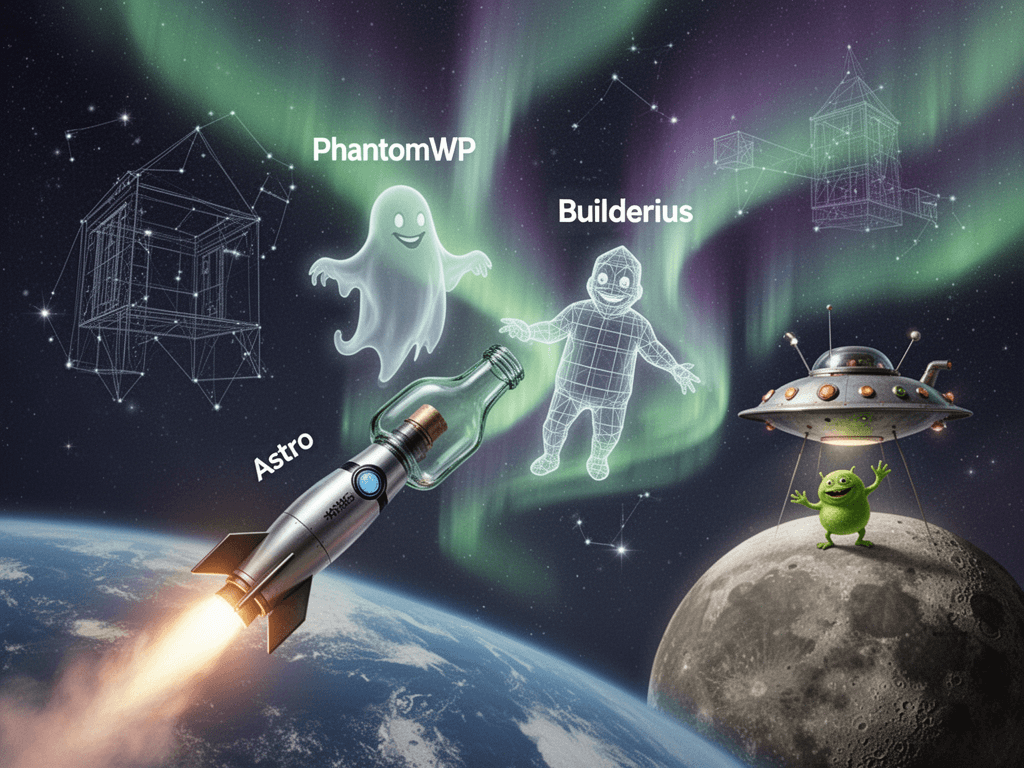
Builderius and PhantomWP: The Real Revolution
While Cloudflare builds from the top down, teams like Builderius and PhantomWP are building from the ground up—deep inside the W*rdPress ecosystem itself. These are not corporate experiments. They are developer-led revolutions.
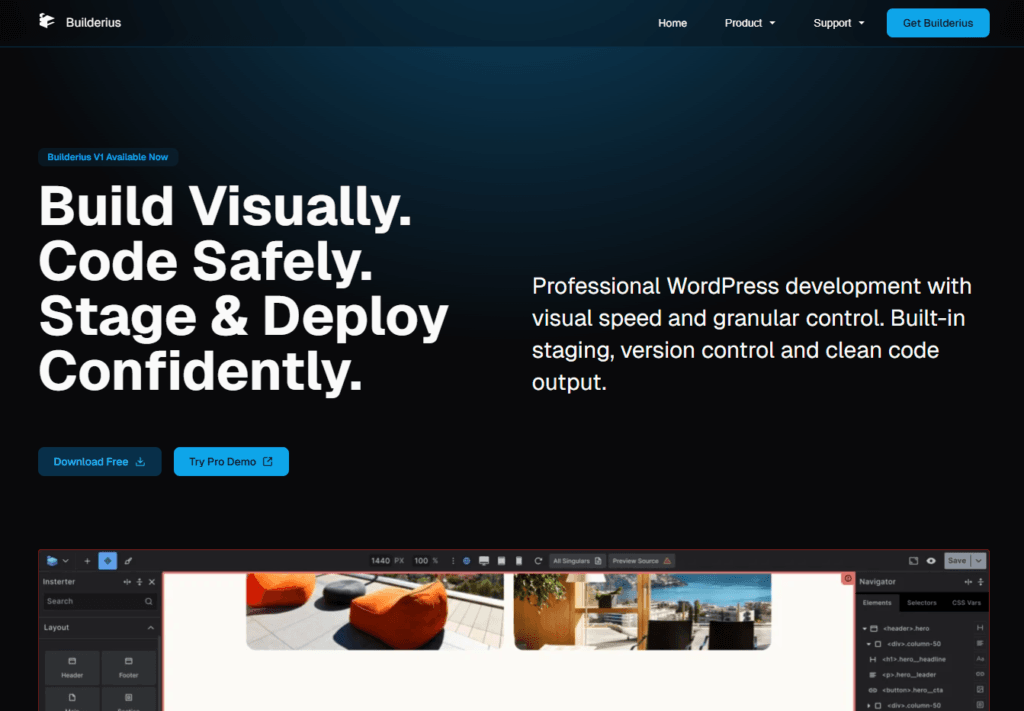
Builderius: Engineering-First W*rdPress
Builderius is not a page builder in the traditional sense. It’s a developer-grade visual builder that respects modern engineering principles.
- Clean architecture
- Component-based workflows
- Full control over markup and performance
- Designed for professionals, not drag-and-drop amateurs
Builderius doesn’t try to replace W*rdPress. It evolves it from within.
PhantomWP: The Ghost in the Machine
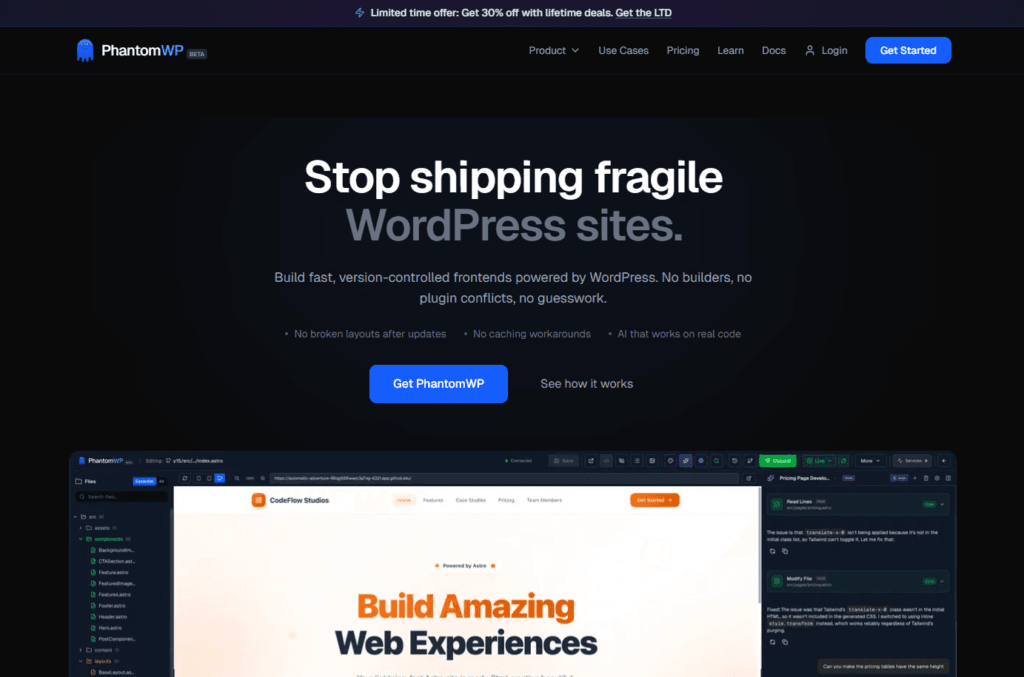
PhantomWP takes a more radical approach—decoupling and reimagining W*rdPress in ways that feel almost subversive.
- Headless-ready
- Performance-focused
- Minimal overhead
- Built for the future, not legacy compatibility
It strips W*rdPress down to its essence and rebuilds it as a modern system.
Why They Matter More Than EmDash
Here’s the uncomfortable truth: Cloudflare is reacting. Builderius and PhantomWP are inventing.
These tools come from developers who have lived inside W*rdPress’s limitations for years. They understand the pain at a granular level—and their solutions reflect that lived experience.
They are not trying to control the ecosystem. They are trying to liberate it.
“The future isn’t built by tearing everything down, but by outgrowing what once felt indispensable.”
Lolita D. Maxxxine
Sage, Blade, and the Silent Evolution
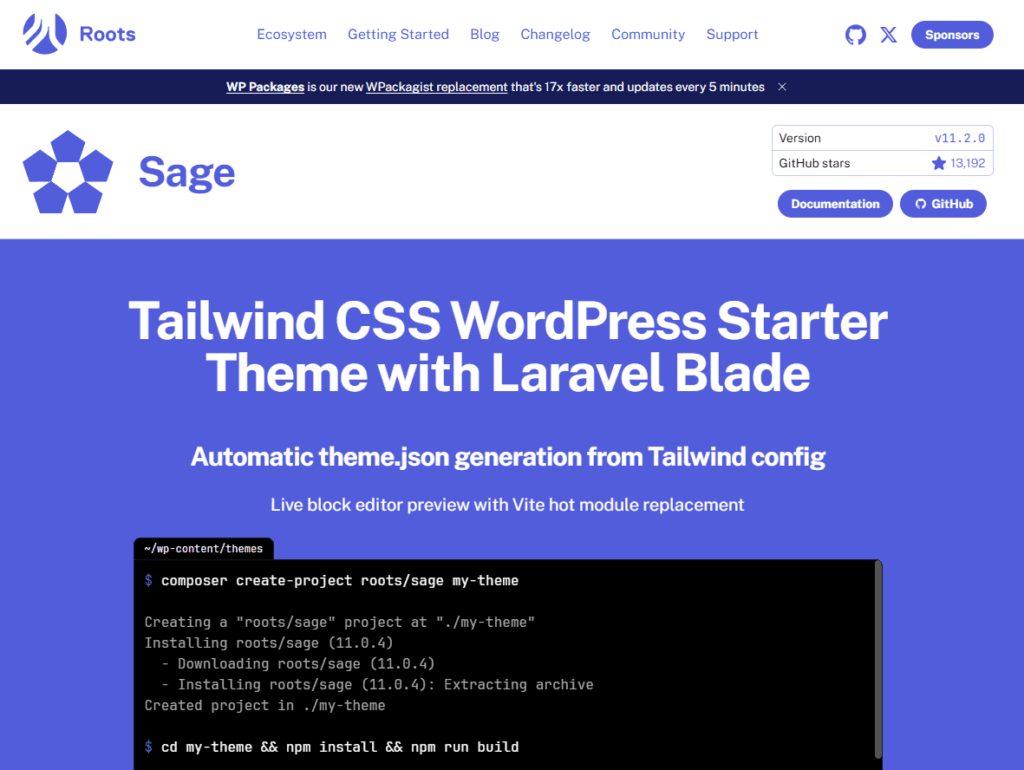
While the spotlight is on flashy new platforms, frameworks like Sage (Roots) and templating systems like Blade have already been pushing W*rdPress into the modern era.
- MVC-like architecture
- Clean separation of concerns
- Laravel-inspired workflows
- Developer happiness as a priority
These tools prove something critical: W*rdPress doesn’t need to be replaced. It needs to be respected—and evolved.
The Corporate Ceiling vs the Open Sky
Cloudflare’s EmDash is impressive. It solves real problems. It will attract developers. But it has a ceiling. Because corporate platforms always do.
They optimize for:
- Predictability
- Monetization
- Ecosystem control
Open-source ecosystems optimize for:
- Creativity
- Chaos
- Breakthrough innovation
"Technology doesn’t liberate us by design—it liberates us when we reshape it to serve new ideas."
Lolita D. Maxxxine
W*rdPress, for all its flaws, remains one of the most powerful open-source movements in history.
It has enabled:
- Global developer communities outside Silicon Valley
- Independent creators to build businesses
- Entire economies around digital publishing
No corporate platform can replicate that.
W*rdPress: Flawed, Fractured, yet Still Unstoppable - Yet, but not a Jet
Yes, W*rdPress has internal issues. Yes, leadership decisions have been questioned. Yes, its architecture shows its age.
But none of that changes its fundamental nature: It is open.
And that openness is why teams across Europe, Asia, South America, and beyond are building tools that outpace anything coming out of corporate labs.
Tony asked a simple question in the past:
Hi everyone, I am a bit worried by a piece of code some redditors discovered on WooCommerce. Apparently WooCommerce sends Automattic's partner ID (referral) to Stripe every time you make a transaction with Stripe.

I am a bit suprised and concerned for some of my clients, as this could potentially violate the GDPR in my little understanding. This is why I am asking here to see if someone can clarify if it's good to use even with that code embedded or if it would theoretically be against GDPR.

Some Redditor user also developed a plugin, which apparently removes that bit of code. Not me and I'm not affiliated with them, only concerned. Link to WooCommerce Stripe code https://github.com/.../includes/class-wc-stripe-api.php...

Thank you!
La Viva la Revolution: The Red Star Future
Revolutions don’t begin with fire—they begin when people refuse to accept the limits of the tools they’ve been given.
Chapter I: The Spark
The web was never meant to be owned. It was meant to be built.
Every line of code in W*rdPress carries that original spark—the idea that publishing should belong to everyone.
Chapter II: The Fracture
Corporations saw the power of the web and moved to contain it. Platforms became ecosystems. Ecosystems became walled gardens.
And freedom became a feature—rather than a right.
"A network becomes powerful not when it centralizes control, but when it dissolves it."
Lolita D. Maxxxine
Chapter III: The Rebellion
Builderius. PhantomWP. Sage. Blade. These are not just tools. They are signals. Signals that developers are no longer waiting for permission. They are rebuilding the web on their own terms.
Chapter IV: The Edge of Tomorrow
Cloudflare’s EmDash represents the future—if the future is centralized, optimized, and controlled.
The open-source movement represents a different future—messy, unpredictable, but infinitely more creative.
Chapter V: The Red Star
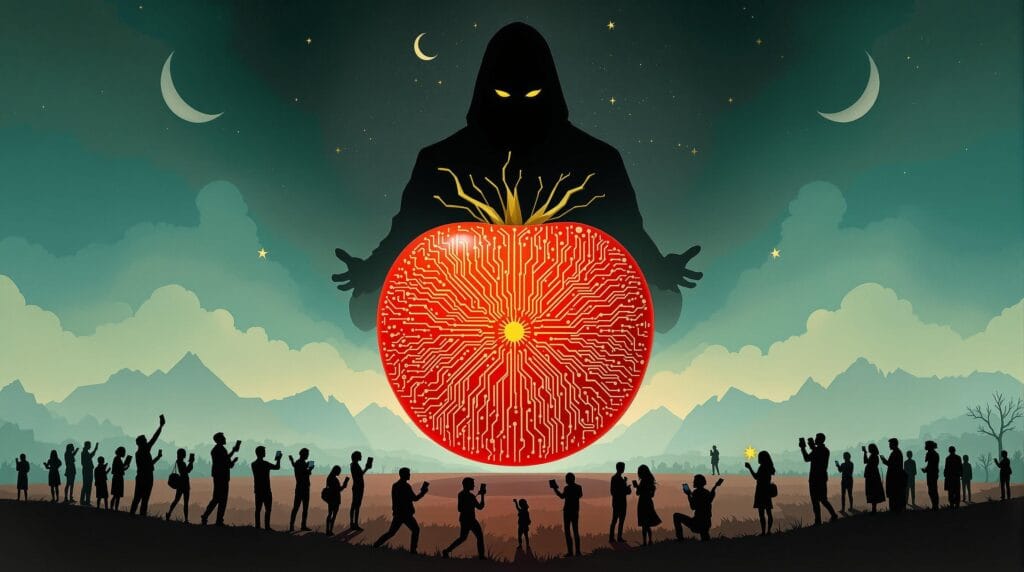
The revolution is not coming. It is already here. And it does not belong to corporations.It belongs to those who build.
"What we call innovation is often just the moment we stop pretending the old constraints still matter."
Luma Heineken
Evolution vs Reinvention
EmDash is a glimpse into what a modern CMS can be when engineered from scratch on cutting-edge infrastructure.
But Builderius, PhantomWP, and the broader W*rdPress ecosystem represent something deeper:
Evolution driven by community, not control.
If you want:
- Stability, performance, and enterprise backing → EmDash
- Freedom, innovation, and future-proof creativity → W*rdPress’s new generation
The real question isn’t which tool is better. It’s which future you want to build for. Because one is being designed for you. And the other is being built by you.
La viva la revolution!

SPACELAUNCH NOW!
Get Your Site Up & Running
SpaceLaunch is an ideal choice for those seeking to swiftly establish their own website, it offers a comprehensive and user-friendly solution backed by essential features, FREE domain registration / transfer / renewal, 1h FREE technical support to get you going, and the flexibility to grow and expand as needed (add-ons available).